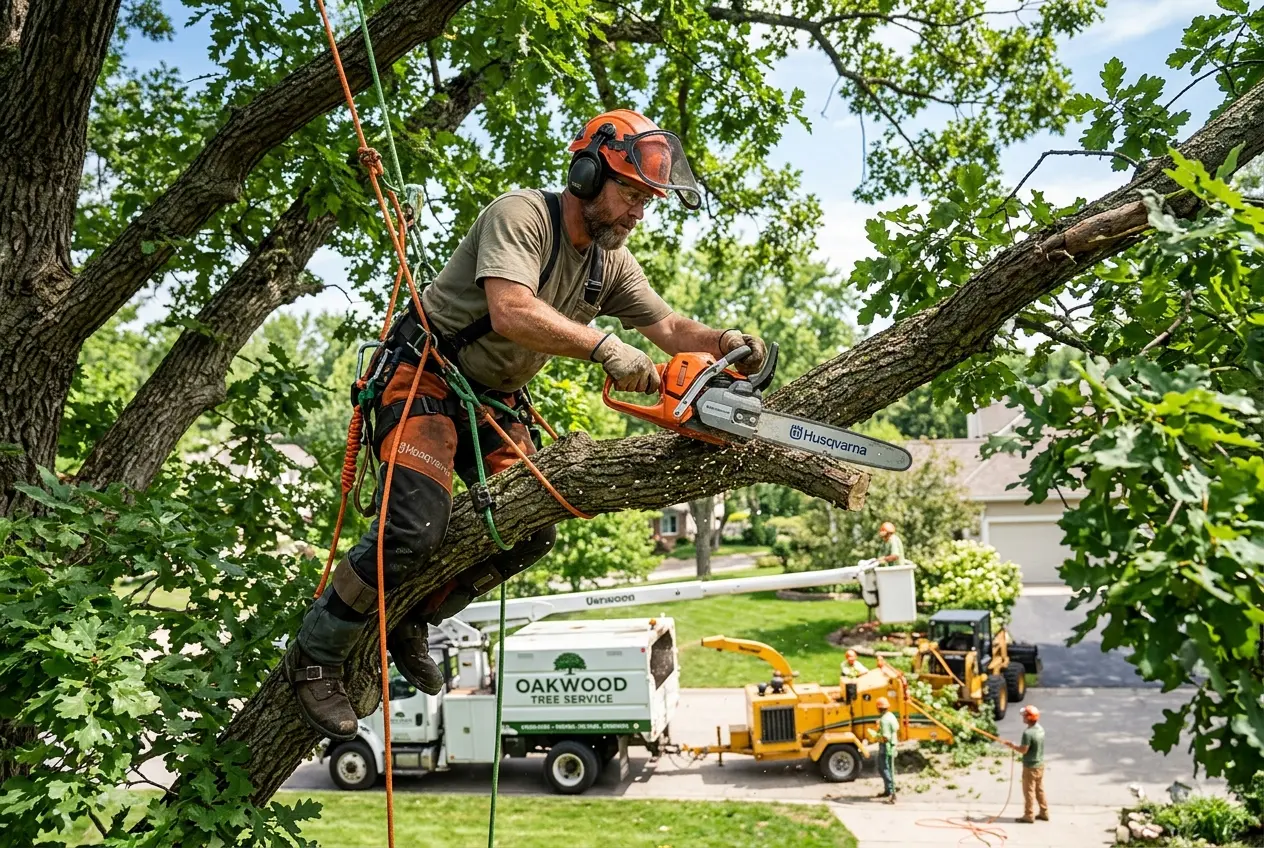
Proper trimming extends tree life and prevents storm damage—a must in Charlotte’s thunderstorm-prone summers. We follow ANSI A300 standards, focusing on structural integrity rather than just aesthetics.
For older neighborhoods like NoDa, we practice crown cleaning to remove deadwood from historic oaks without over-thinning. In newer Ballantyne developments, we shape young trees to encourage strong branch angles that resist ice storm damage.
We time pruning carefully: oaks are trimmed in winter to prevent wilt disease, while crepe myrtles (ubiquitous in Concord) get summer shaping. All cuts are sealed with organic paste to discourage pests common in our humid climate.
For older neighborhoods like NoDa, we practice crown cleaning to remove deadwood from historic oaks without over-thinning. In newer Ballantyne developments, we shape young trees to encourage strong branch angles that resist ice storm damage.
We time pruning carefully: oaks are trimmed in winter to prevent wilt disease, while crepe myrtles (ubiquitous in Concord) get summer shaping. All cuts are sealed with organic paste to discourage pests common in our humid climate.
Our Process
- 01 Step 1: Assess tree structure, health, and future growth space
- 02 Step 2: Remove dead/diseased limbs and crossing branches
- 03 Step 3: Thin canopy judiciously to reduce wind resistance
- 04 Step 4: Apply wound dressing and clean all debris
Benefits
- Reduces storm breakage risk by up to 60%
- Improves flowering/fruiting in ornamentals
- Promotes balanced growth in tight urban spaces
- Prevents disease spread between trees
Frequently Asked Questions
How often should I trim my trees?
Most Charlotte trees benefit from trimming every 3–5 years. Fast-growing water oaks in Huntersville may need biennial attention.
Can topping my tree control its height?
Never—topping creates hazardous weak growth. We’ll suggest alternatives like crown reduction, especially for street trees under power lines.